Asthma: Causes, Signs & Management
Asthma: Causes, Signs & ManagementAsthma is a chronic condition in which the airways become inflamed, sensitive, and temporarily narrowed. Symptoms often come and go and may be triggered by…
Ay Abdullahi · Admin
· 2 min read
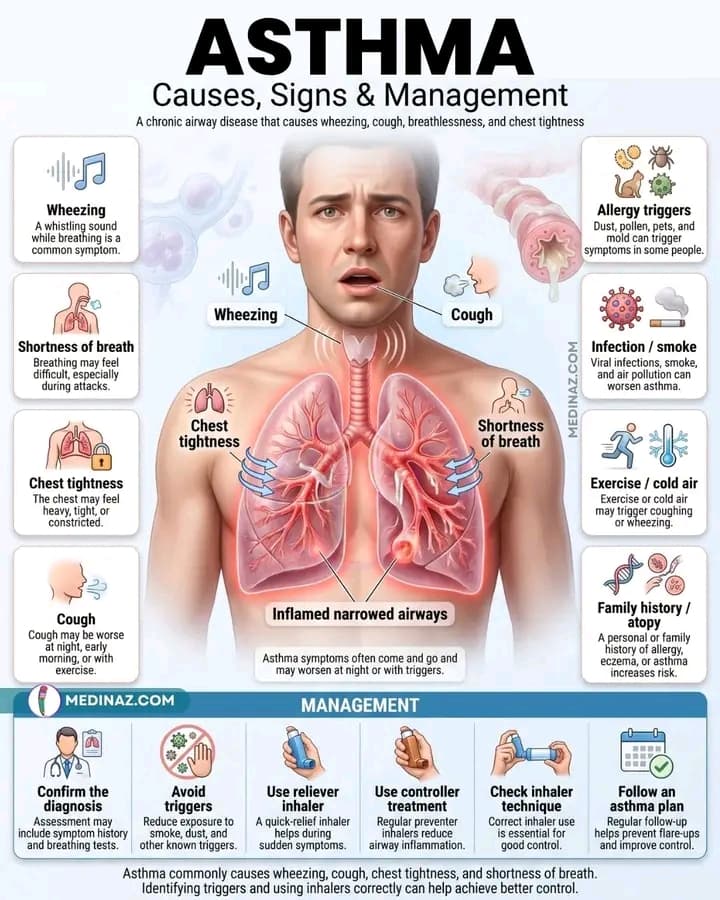
Asthma: Causes, Signs & Management
Asthma is a chronic condition in which the airways become inflamed, sensitive, and temporarily narrowed. Symptoms often come and go and may be triggered by allergens, infections, exercise, cold air, smoke, or pollution.
⠀
🟣 Wheezing
➟ Wheezing is a high-pitched whistling sound, usually heard when breathing out
➟ It happens when narrowed airways make it harder for air to move freely
⠀
🟣 Shortness of Breath
➟ Breathing may feel difficult, tight, or more effortful than usual
➟ Breathlessness may appear during exercise, at night, or during an asthma flare-up
⠀
🟣 Chest Tightness
➟ The chest may feel tight, heavy, or constricted
➟ Some people describe it as a band-like pressure around the chest
⠀
🟣 Cough
➟ Asthma can cause a persistent or recurring cough
➟ It is often worse at night, early in the morning, with exercise, or after exposure to triggers
➟ In some people, cough may be the main symptom
⠀
🟣 Allergy Triggers
➟ Dust mites, pollen, mould, pets, and other allergens can trigger symptoms in susceptible people
➟ Allergic conditions such as eczema or hay fever commonly occur alongside asthma
⠀
🟣 Infections, Smoke & Pollution
➟ Viral respiratory infections are a common cause of asthma flare-ups
➟ Cigarette smoke, vaping aerosols, air pollution, and strong fumes can also worsen symptoms
⠀
🟣 Exercise & Cold Air
➟ Exercise can trigger temporary airway narrowing in some people
➟ Cold, dry air may also cause coughing, wheezing, or chest tightness
➟ With appropriate treatment, most people with asthma should still be able to exercise regularly
⠀
🟣 Family History & Atopy
➟ Asthma is more common in people with a personal or family history of asthma, eczema, or allergic disease
➟ Genetics and environmental exposures both contribute to risk
⠀
🟣 How Asthma Is Diagnosed
➟ Diagnosis is based on the pattern of symptoms and evidence that airflow changes over time
➟ Tests may include spirometry, bronchodilator testing, peak-flow monitoring, or FeNO testing
➟ Symptoms alone cannot reliably confirm asthma
⠀
🟣 Management
➟ Avoid or reduce exposure to known triggers where practical
➟ Use your reliever inhaler as prescribed for sudden symptoms
➟ Regular controller/preventer treatment, usually containing an inhaled corticosteroid, helps reduce airway inflammation and future attacks
➟ Correct inhaler technique is essential for treatment to work properly
➟ Follow a personalised asthma action plan and attend regular reviews
⠀
🟣 Seek Urgent Medical Help If
➟ Breathlessness is severe or rapidly worsening
➟ You are struggling to speak in full sentences
➟ Your reliever inhaler is not helping or symptoms return very quickly
➟ Lips or fingertips look blue or grey
➟ You become confused, exhausted, or unusually drowsy
⠀
Medical disclaimer: This information is for general educational purposes only and does not replace professional medical advice, diagnosis, or treatment. Asthma symptoms should be assessed by a qualified healthcare professional, and severe breathing difficulty requires urgent medical care.
More from TimesPosts
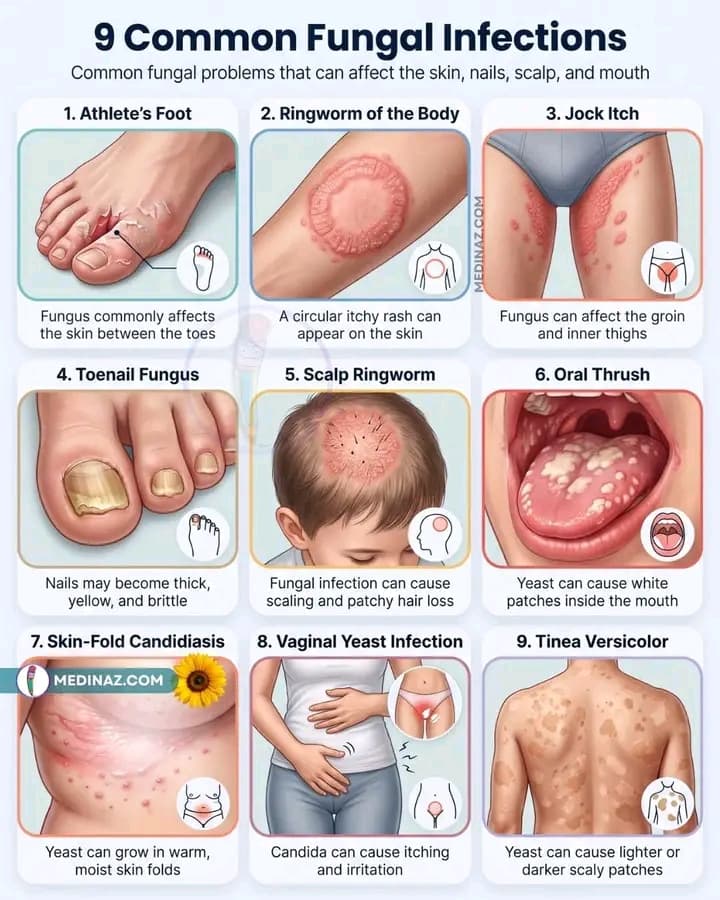
What Did You know About Fungal Infections
9 Common Fungal InfectionsFungal infections can affect the skin, nails, scalp, mouth, and genital area. Many are mild and treatable, but some can spread, recur, or need prescription treatment.⠀🟣 1.…
Ay Abdullahi3 min read

Ko Mai Yasa Haka kuwa ...
Babbar Kotun Tarayya da ke zamanta a Legas ta bayar da umarnin kwace wayoyin salula guda 431 na dindindin tare da mika su ga Gwamnatin Tarayya, bayan Hukumar Yaki da Cin Hanci da Rashawa ta EFCC ta…
Ay Abdullahi2 min read

The More Reason Why Tinubu Must Go
The More Reason Why Tinubu Must GoBy Abba Hikima, Esq. You see, this“Must Go” expression is not peculiar to Nigeria. Across the world, citizens have used precisely the same language to express…
Ay Abdullahi2 min read