Swallowing is not just a simple reflex — it is a perfectly coordinated performance of muscles, arches, and soft tissue working in milliseconds.
Swallowing is not just a simple reflex — it is a perfectly coordinated performance of muscles, arches, and soft tissue working in milliseconds.The soft palate and oropharyngeal muscles help guide…
Ay Abdullahi · Admin
· 1 min read
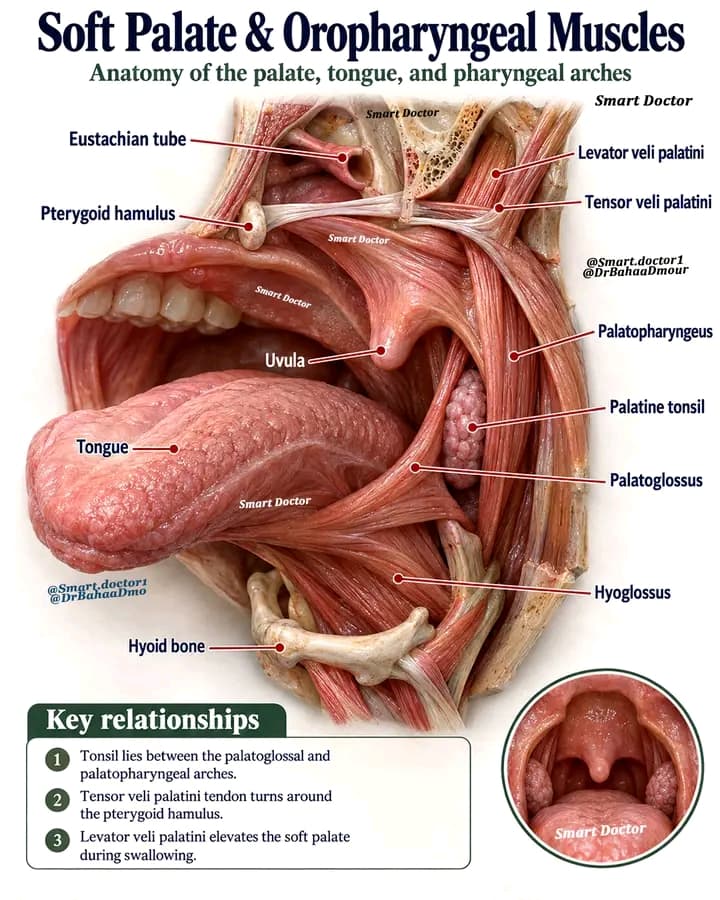
Swallowing is not just a simple reflex — it is a perfectly coordinated performance of muscles, arches, and soft tissue working in milliseconds.
The soft palate and oropharyngeal muscles help guide food, protect the airway, shape speech, and even contribute to pressure regulation through the Eustachian tube. In this region, anatomy is everything.
Key structures to know:
• Levator veli palatini elevates the soft palate during swallowing.
• Tensor veli palatini tenses the soft palate and helps open the auditory tube.
• Palatoglossus and palatopharyngeus form the pharyngeal arches and help control the passage between the mouth and pharynx.
• The palatine tonsil lies between these two arches — a classic and clinically important relationship.
• The uvula is more than decoration; it contributes to palatal movement and speech resonance.
• The hyoglossus connects tongue movement with the hyoid region, supporting swallowing dynamics.
This is why this area matters so much in ENT, airway assessment, dysphagia, tonsillitis, intubation, and head & neck surgery. When the anatomy is clear, the function becomes much easier to understand.
🔹 The soft palate, tongue, and pharyngeal muscles work together to coordinate swallowing, speech, and airway protection. A small region — but clinically very important.
#Smartdoctor1 #Anatomy #ENT #DrBahaaDmour #MedicalEducation
More from TimesPosts
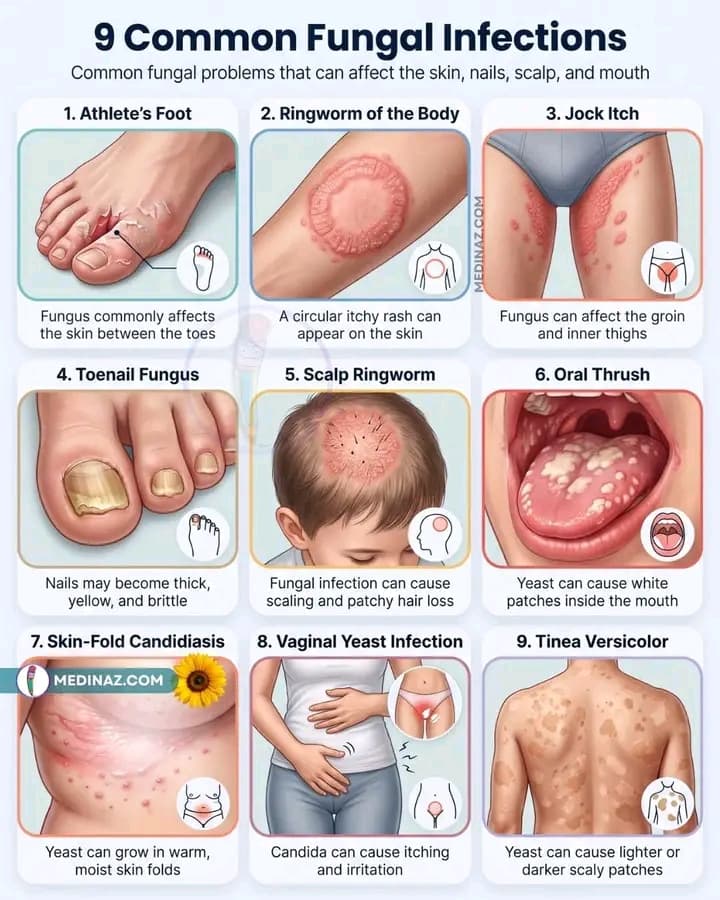
What Did You know About Fungal Infections
9 Common Fungal InfectionsFungal infections can affect the skin, nails, scalp, mouth, and genital area. Many are mild and treatable, but some can spread, recur, or need prescription treatment.⠀🟣 1.…
Ay Abdullahi3 min read
Ko Mai Yasa Haka kuwa ...
Babbar Kotun Tarayya da ke zamanta a Legas ta bayar da umarnin kwace wayoyin salula guda 431 na dindindin tare da mika su ga Gwamnatin Tarayya, bayan Hukumar Yaki da Cin Hanci da Rashawa ta EFCC ta…
Ay Abdullahi2 min read
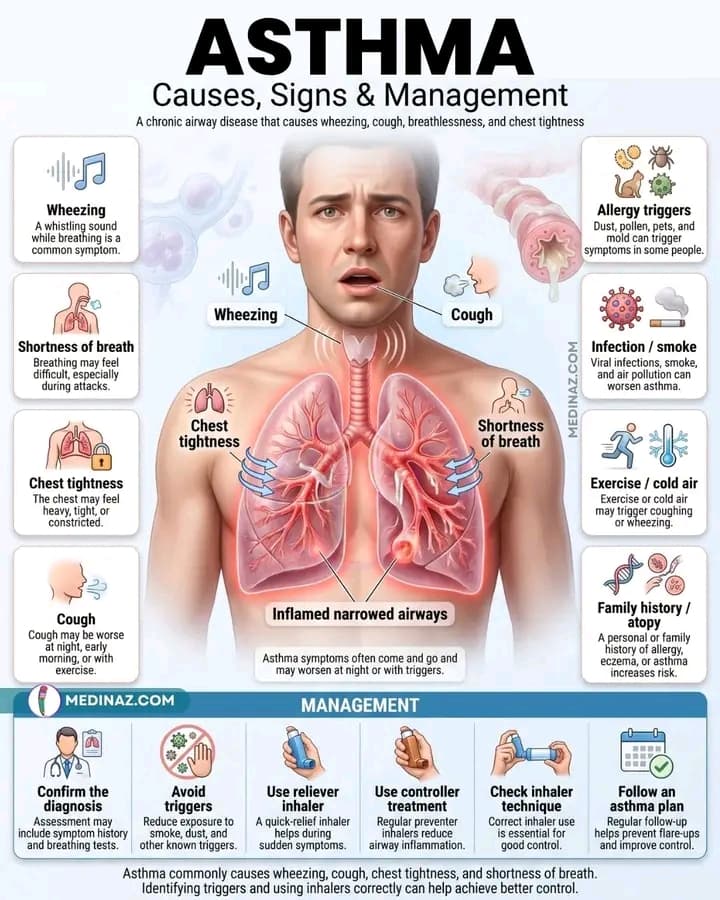
Asthma: Causes, Signs & Management
Asthma: Causes, Signs & ManagementAsthma is a chronic condition in which the airways become inflamed, sensitive, and temporarily narrowed. Symptoms often come and go and may be triggered by…
Ay Abdullahi2 min read